
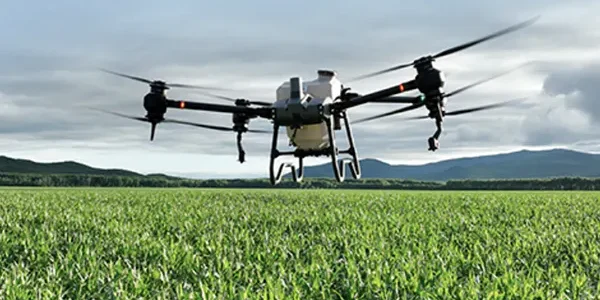
If you’re a grower looking at getting into spray drone technology, one of the first questions you’ll probably ask is whether you actually need a licence to fly one. The short answer? In most cases, yes. But the details depend on how you plan to use the drone, where you’re flying, and which state you’re operating in.
Here’s a practical breakdown of what’s required so you can plan your path into ag drone spraying with confidence.
Table of Contents
- CASA Requirements: The Federal Layer
- State Chemical Licensing: The Second Layer
- So What Does the Full Licensing Pathway Look Like?
- Get Started the Right Way
CASA Requirements: The Federal Layer
All drone operations in Australia are regulated by the Civil Aviation Safety Authority (CASA). The rules that apply to you will depend on the weight of your drone and how you intend to use it.
Most agricultural spray drones, like the DJI Agras T50 and T100, fall into the medium category (25kg to 150kg when fully loaded). That puts them in a different class to the sub-2kg drones you might fly around the farm for photos or stock checks.
If you’re spraying on your own land with a single drone, CASA doesn’t actually require any authorisation at the federal level. That might sound like a free pass, but don’t get too excited. Your state government almost certainly has its own chemical application laws that still apply, and those laws typically do require licensing. More on that below.
If you’re operating commercially (spraying other people’s properties for payment), the requirements are more involved. You’ll need:
- A Remote Pilot Licence (RePL) issued by CASA
- A spray drone type endorsement for the specific aircraft you’re flying
- A Remotely Piloted Aircraft Operator’s Certificate (ReOC), or to work under a business that holds one
- Drone registration with CASA (currently $40 per year)
Getting your RePL involves completing a training course through a CASA-certified provider. This typically includes theory and practical flying components. From there, you’ll need to complete a type endorsement on your specific spray drone, which involves a flight assessment.
State Chemical Licensing: The Second Layer
This is where it gets a bit more complex. On top of CASA’s aviation requirements, each state and territory in Australia has its own rules around the aerial application of agricultural chemicals. These are separate to CASA and are managed by state environment or agriculture departments.
Queensland
Queensland’s Agricultural Chemicals Distribution Control Act requires that anyone conducting aerial distribution of agricultural chemicals must hold a pilot chemical rating licence, regardless of whether you’re spraying on your own property or someone else’s. You’ll also need a RePL and a type endorsement. If you’re running a business, you’ll need an aerial distribution contractor licence as well.
Chemical handling training is also required. The key units of competency are AHCCHM304 (Transport and Store Chemicals) and AHCCHM307 (Prepare and Apply Chemicals to Control Pests, Weeds and Diseases).
New South Wales
In NSW, the EPA requires both an RPA pilot licence and an RPA business licence to aerially apply pesticides by drone. There’s an exemption for landowners applying pesticides on their own land with their own drone, but the pilot licence is still generally required. Keep in mind that pesticide discharge is restricted within 150 metres of any dwelling, school, or public place without written permission.
Victoria
Victoria requires a Pilot Chemical Rating Licence (PCRL) for anyone piloting a drone for aerial spraying. Businesses also need an Agricultural Aircraft Operator Licence (AAOL) that specifically authorises spraying from drones. Operators must comply with SpraySafe accreditation or an equivalent standard.
Western Australia
WA’s requirements are managed by the Department of Agriculture and Regional Development. Operators need SpraySafe accreditation or equivalent, along with the standard CASA licensing.
Other States and Territories
South Australia, Tasmania, and the Northern Territory each have their own frameworks as well. The specifics vary, but the common thread is that you’ll need some form of chemical application licence on top of your CASA credentials.
So What Does the Full Licensing Pathway Look Like?
For most people getting into spray drone operations, the steps look something like this:
- Get an Aviation Reference Number (ARN) from CASA
- Complete your RePL through a certified training provider
- Complete a spray drone type endorsement on your specific aircraft
- Register your drone with CASA
- Complete chemical handling training (AHCCHM304 and AHCCHM307)
- Apply for your state chemical application licence
- If operating commercially, obtain a ReOC (or work under one) and any required state business licences
Get Started the Right Way
The licensing process might look like a lot of steps, but each one exists to make sure you’re flying safely and applying chemicals responsibly. Getting it right from the start protects your investment, your crops, and your neighbours.
At NQ Aerovation, we help growers and aspiring drone pilots navigate the entire process. From RePL training and spray drone endorsements through to ongoing operational support, we’re with you every step of the way.
Ready to get started? Book a free Agriculture Drone Discovery Call and we’ll help you map out your pathway into spray drone operations.